
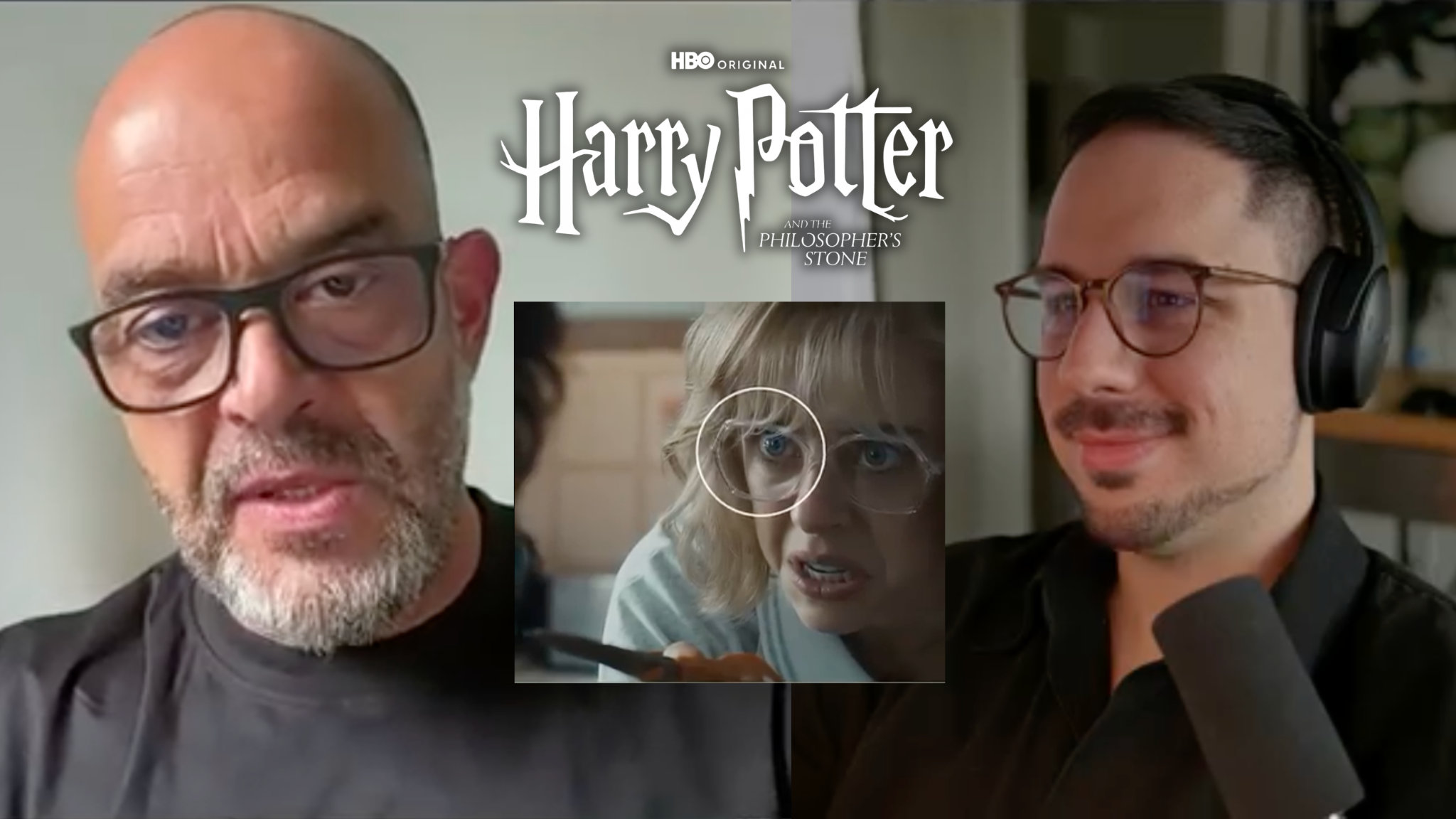
Adriano Goldman Breaks Down the Lighting Secrets Behind HBO’s “Harry Potter”
Muggle or wizard, cinematography can be its own kind of magic and Adriano Goldman, the man casting that particular spell on HBO’s Harry Potter, is opening up about how he does it.
Adriano Goldman, the Brazilian cinematographer serving as Harry Potter‘s lead director of photography, sat down with fellow Brazilian filmmaker André Pilli for a new interview, posted this week to Pilli’s YouTube channel (nearly half a million subscribers). It’s a notable voice to have weighing in: Goldman has built his reputation on award-winning work, including two Emmys for The Crown and acclaimed cinematography on Andor, making him one of the most in-demand directors of photography working in television today. Here, he uses the conversation to lay out the lighting philosophy he’s carried across his biggest projects — and it’s now shaping Hogwarts too. A companion clip digs further into his approach to exposure.
In Adriano Goldman’s Own Words
Spoken in Portuguese; English translation follows.
Tenho algumas obsessões, e isso me ajuda muito aí guiando a minha estratégia de iluminação. O conceito que, por acaso, foi aplicado no Crown, no Andor, agora também no Harry Potter… É o que eu chamo de single source approach. Então, uma é que eu não veja mais de uma sombra no rosto de alguém. Eu tenho obsessão por eye sparkles. Preciso, de um jeito, achar o olho claro e um brilho no olho. Quanto mais longe das janelas eles tiverem, maior a necessidade de trazer alguma coisa complementar. É um pouco assim que eu vou pensando o tempo todo. Qual é a melhor fonte pra eu usar neste ambiente? Eu tenho uma janela muito grande aqui. Ótimo. Mas primeiro, conseguirei ter uma fonte do lado de fora? Então aí eu parto disso e vou elaborando os subsequentes planos, porque nem tudo é feito em planos abertos.
English translation:
I have a few obsessions, and they really help guide my lighting strategy. It’s a concept that, as it happens, got applied on The Crown, on Andor, and now on Harry Potter too — it’s what I call the single source approach. One of them is that I don’t want to see more than one shadow on someone’s face. I’m also obsessed with eye sparkles — I need to somehow get a clear eye with a glint of light in it. The further someone is from a window, the more I need to bring in something to complement that. That’s basically how I’m thinking the whole time: what’s the best source I can use in this environment? I’ve got a huge window here — great, but first: can I get a source set up outside it? That’s where I start, and I build out the rest of the shots from there, because not everything is done in wide shots.
Goldman spoke in Portuguese; the English translation above is ours and may not perfectly capture his exact phrasing.
For a franchise that’s leaned heavily on visual effects in the past, that kind of hands-on, practical approach could give this version of Hogwarts a very different texture on screen.
Where things stand:
- Premiere date: December 25, 2026, on HBO and HBO Max
- Season 1: eight episodes, with Goldman leading photography on four (the first two and the finale two)
- Season 2: already renewed, adapting Harry Potter and the Chamber of Secrets
- Cast includes Dominic McLaughlin, Arabella Stanton, and Alastair Stout as the central trio, alongside John Lithgow, Janet McTeer, Paapa Essiedu, and Nick Frost
- Showrunner Francesca Gardiner, with Mark Mylod directing
For the complete picture — casting, premiere details, and everything else confirmed so far — our full guide to HBO’s Harry Potter has you covered.
Excited to see how it all looks once the series premieres? Let us know in the comments, and don’t forget to follow along for more Harry Potter news.
Source: André Pilli (YouTube)


